The Guardian view on the Bank of England’s £120bn bill: power without accountability | Editorial
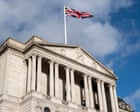
Quantitative tightening has blurred the line between monetary and fiscal policy, leaving ministers accountable for decisions they cannot directly control When Labour made the Bank of England independent in 1997, the idea was that the Bank set interest rates while the Treasury taxed and spent. Monetary policy was in Threadneedle Street, fiscal policy in Whitehall. But in August the Bank of England quietly slipped out that its key policy could cost the Treasury £120bn. That policy – quantitative t
When Labour made the Bank of England independent in 1997, the idea was that the Bank set interest rates while the Treasury taxed and spent. Monetary policy was in Threadneedle Street, fiscal policy in Whitehall. But in August the Bank of England quietly slipped out that its key policy could cost the Treasury £120bn. That policy – quantitative tightening (QT) – clearly ought to be rethought and the policy of the Treasury indemnifying the Bank for its losses ended. Last year, ministers paid the Bank £17bn to cover these arguably notional losses – an amount considerably larger than the budget of the Ministry of Justice, which is dealing with a real prisons crisis.
Bank independence was constructed for a world in which monetary policy decisions had predictable and indirect fiscal effects. The financial crisis, Covid, war and fractious trade disputes have contributed to ending that world. The Bank bought up government bonds to support the economy via its quantitative easing (QE) programme. But the constitutional settlement – of an independent central bank working out on its own what to do with those bonds – has not caught up. The game is surely up when a former Bank deputy governor, Charlie Bean, acknowledges that independence cannot justify effectively giving power to an unelected monetary policy committee (MPC) over decisions with great consequences for public spending.
Continue reading...
Summary aggregated from The Guardian's public RSS feed. The full reporting belongs to The Guardian — please read it on their site.